

How Dental Implants Work
Dental implants are artificial tooth roots that are surgically placed into the jawbone to support replacement teeth. Unlike traditional dentures or bridges that rest on the gums, implants are anchored directly into the bone, providing outstanding stability and helping preserve healthy jawbone structure.
At Center for Advanced Dentistry in Loveland, CO, implants are typically made from titanium and serve as a strong foundation for a dental crown, bridge, or denture. As the jawbone heals and fuses with the implant—a process that usually takes three to six months—you receive a long-lasting tooth replacement that can function and look like a natural tooth with proper care.
Am I Eligible?
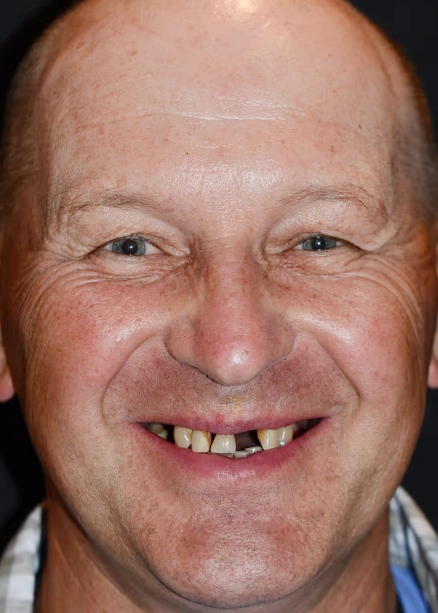
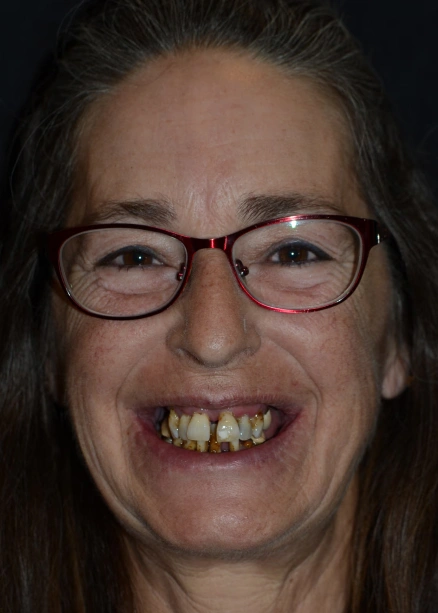
Real Patients. Real Results.
More Before & After Implants




Dental Implant Treatments We Offer
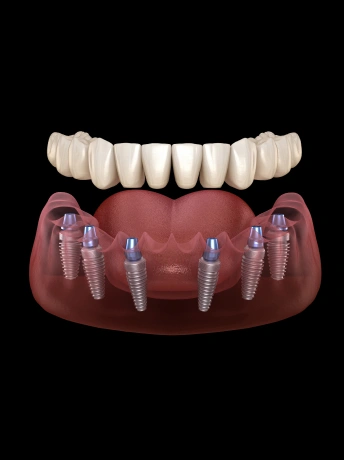
All-On-X Dental Implants
All-On-X dental implants restore an entire arch of missing or failing teeth using a strategic number of implants (“X”) to support a fixed set of replacement teeth. The most common option is All-On-4®, which uses four implants, while All-On-6 and similar variations provide added support. Implants are placed at precise angles to maximize stability and often reduce the need for bone grafting, resulting in permanent teeth that look, feel, and function naturally.
- Replaces a full arch of teeth with a fixed restoration
- Uses strategically placed implants for strong support
- May eliminate the need for bone grafting
- Delivers natural-looking, fully functional results
- Ideal for patients seeking a secure alternative to dentures
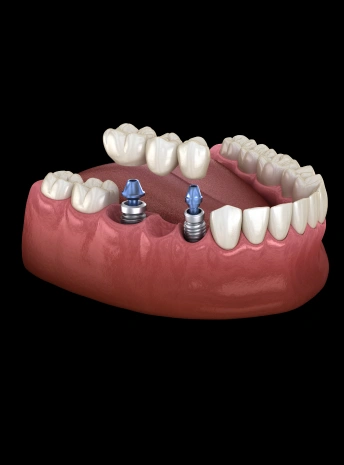
Implant-Supported Bridges
Implant-supported bridges replace two or more missing teeth by securing a custom bridge to dental implants placed in the jawbone. Instead of relying on nearby natural teeth, the implants provide strong support and help prevent bone loss. Once healed, the bridge restores normal chewing, speech, and a natural-looking smile.
- Replaces multiple missing teeth in a row
- Anchored to implants for superior stability
- Helps preserve jawbone and facial structure
- Does not require reshaping healthy adjacent teeth
- Restores natural function and appearance
- Long-lasting alternative to traditional bridges
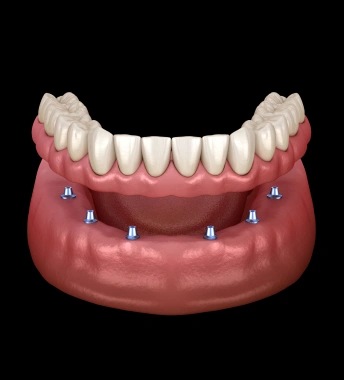
Implant-Supported Dentures
Implant-supported dentures combine the stability of dental implants with the convenience of removable dentures. Instead of resting loosely on the gums like traditional dentures, these dentures snap or clip securely onto implants placed in the jawbone. This provides greater comfort, improved chewing ability, and confidence that comes from denture stability throughout daily activities.
- Greater stability than traditional dentures
- Snaps onto implants for secure fit
- Improves chewing and speech
- Reduces slipping and irritation
- Helps preserve jawbone health
- Easy to remove for cleaning
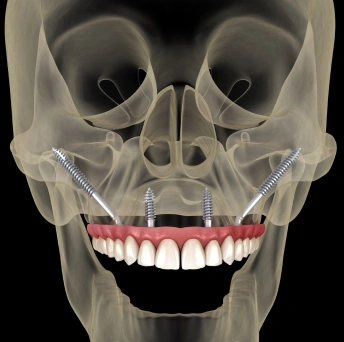
Remote Anchorage Dental Implants
Remote anchorage dental implants are used when standard implant placement isn’t possible due to limited bone or anatomical challenges. Implants are placed in stronger, more stable areas of the jaw and connected to the restoration with custom components, providing reliable support for replacement teeth in complex cases.
- Ideal for limited bone conditions
- Placed in denser bone areas
- Supports stable restorations
- Alternative to traditional placement
- Restores function and appearance
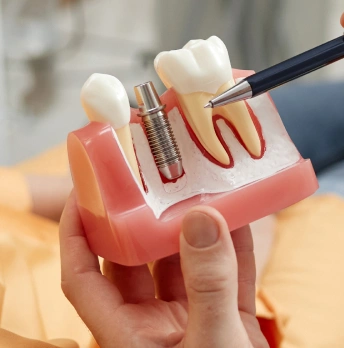
Same-Day Dental Implants
Same-day implants allow patients to receive dental implants and temporary replacement teeth in a single visit. With advanced planning and technology, implants are placed and a restoration is attached right away, providing immediate function and an improved smile while healing continues.
- Teeth in one visit
- Shortens treatment time
- Immediate function and appearance
- Utilizes advanced planning technology
- Uses advanced technology
- For qualified candidates
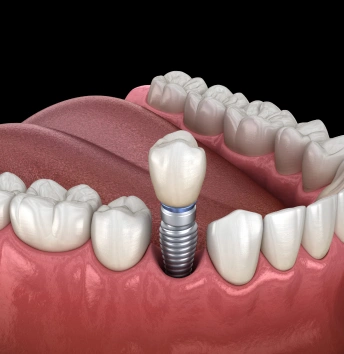
Single-Tooth Dental Implants
Single-tooth dental implants replace one missing tooth by placing a titanium implant into the jawbone where the natural root once was. After the implant integrates with the bone, a custom crown is attached, restoring the look and function of the missing tooth while preserving surrounding healthy teeth.
- Replaces one missing tooth
- Uses a titanium implant post
- Custom crown for natural appearance
- Preserves adjacent teeth
- Restores chewing and speech
- Long-lasting solution
Additional Specialized Implant Options
Single-Tooth vs. Full-Arch Implants
The extent of your tooth loss determines whether single implants or full implants are the right solution. A single implant is used to replace one missing tooth, while full implants are designed to replace all teeth in the upper or lower arch.
Recovery Time:
Healing depends on the type of implant used, but typically ranges from 3 to 6 months for endosteal implants.
For some patients, replacing each missing tooth with an individual implant may be recommended. While this approach offers the most natural function, it is also the most complex and costly option. In many cases, implant-supported dentures that use fewer implants to support multiple teeth provide a more practical and efficient alternative.
3-on-6 Implants
The 3-on-6 implant system uses three separate dental bridges supported by six dental implants. Similar to All-on-4, this approach restores a full arch of teeth but adds extra implant support for greater strength, security, and long-term stability.
- Best for: Patients who want more stability than All-on-4 can provide
- Success rate: Very high, thanks to the increased number of support points
- Recovery time: Typically 3 to 6 months for full integration, similar to All-on-4
Implant-Supported Bridge
An implant-supported bridge is an efficient solution for replacing several missing teeth in a row. Instead of placing an individual implant for each tooth, one or more implants are used to support a bridge that replaces multiple teeth at once.
- Best for: Patients missing multiple adjacent teeth
- Success rate: Similar to single endosteal implants (about 90–95%)
- Recovery time: Typically 3 to 6 months for implant integration before the bridge is placed
Immediate Load Implants (Teeth in a Day)
Also called same-day implants, immediate load treatment is not a specific implant type but a technique that allows temporary teeth to be placed on the same day implants are inserted. This approach is often used with full-arch solutions such as All-on-X implants, giving patients functional teeth right away instead of waiting months during healing. Once the implants fully integrate with the jawbone, permanent crowns or bridges are placed.
- Best for: Patients with good bone density who want to avoid a long waiting period before receiving replacement teeth
- Average cost: Varies based on the number of implants, type of restoration, and individual treatment needs
- Success rate: Approximately 94–98% when patients are carefully selected and proper implant stability is achieved
- Recovery time: Immediate function with a temporary restoration, followed by placement of permanent teeth after about 3 to 6 months of healing
The success of immediate load implants depends on achieving strong initial stability in the bone and selecting appropriate candidates for the procedure.
Dental Implant Healing Process
Immediate Post-Surgery (First 24–48 Hours)
- Mild to moderate discomfort that can be managed with over-the-counter or prescribed pain medication
- Some swelling and light bleeding are normal
- A soft food diet is recommended to support healing
1.
Initial Healing (1–2 Weeks)
- Sutures are usually removed during this period
- Most discomfort and swelling resolve
- Normal daily activities can be resumed, but strenuous exercise should be avoided
2.
Osseointegration Phase (3–6 Months)
- The jawbone gradually grows around and bonds with the implant
- No visible changes occur, but this stage is essential for long-term stability
- Routine check-ups help ensure proper healing and progress
3.
Final Restoration:
- A permanent crown, bridge, or denture is placed
- Full function and a natural-looking smile are restored
4.
Factors that can influence recovery time include:
- Your overall health and natural healing ability
- Smoking status (smokers typically experience slower healing and lower success rates)
- Daily oral hygiene habits
- Whether bone grafting was required
- The number and placement of the implants
5.
Dental Implant Costs Explained
The total cost of dental implants can vary widely depending on several important factors, including:
- The type of implant treatment selected
- The number of teeth being replaced
- Whether bone grafting or other preparatory procedures are required
- Geographic location and the provider’s level of experience
- Materials used for the crown or bridge
- Whether a tooth extraction is needed
- Diagnostic X-rays and imaging
- Follow-up and maintenance appointments
For a single tooth replacement, the implant itself represents only part of the total cost. Additional components such as the crown, abutment, imaging, extractions, and office visits all contribute to the final treatment price.
Benefits of Dental Implants
Dental implants provide many benefits compared to other tooth replacement options:
- Natural Look and Feel: Implants closely mimic the appearance and function of natural teeth.
- Preserves Jawbone Health: Implants stimulate the jawbone, helping prevent bone loss after tooth loss.
- Protects Nearby Teeth: By filling gaps, implants stop surrounding teeth from shifting out of alignment.
- Maintains Facial Structure: Implants support facial contours and help reduce the sunken look caused by missing teeth.
- Long-Lasting Durability: Made from strong titanium, implants are designed to withstand normal chewing forces and can last for many years with proper care.
- Restores Normal Function: Implants allow you to speak and eat comfortably and naturally.
- Improves Chewing Strength: You can enjoy a full range of foods with restored biting power.
- Enhances Quality of Life: Implants can boost confidence, comfort, and overall daily wellbeing.
- No Impact on Healthy Teeth: Unlike traditional bridges, implants do not require altering neighboring teeth.
Could Dental Implants Be Right for You?
Ideal candidates for dental implants generally meet the following criteria:
- Sufficient jawbone density (or a willingness to undergo bone grafting if needed)
- Healthy gums
- Good overall health
- Commitment to proper oral hygiene
- Non-smoker or willing to quit smoking
Nearly half of adults are eligible for dental implants, and this number is expected to continue growing over the next two decades. A comprehensive dental evaluation will help determine the most suitable implant option for your individual needs and oral health goals.
