
Losing a tooth is never ideal, but losing one right in the “smile zone” (the teeth visible when you laugh or speak) can feel like a dental emergency. It changes how you see yourself and how you interact with others in our Colorado community. Beyond the hit to your self-confidence, a missing front tooth creates a functional gap that your body immediately tries to fill. Adjacent teeth may tilt, and the jawbone beneath the empty space begins to thin without the root there to stimulate it.
Addressing this specific area of the mouth requires a blend of clinical precision and artistic vision. You aren’t just looking for a tooth replacement; you want something that mimics the subtle translucency, shape, and shade of your natural enamel. At the Center for Advanced Dentistry, the goal is to ensure no one can tell where nature ends and restorative dentistry begins. We prioritize a conservative approach that protects your surrounding teeth while providing a permanent, rock-solid foundation for your new smile.
Precision Engineering for the Smile Zone
The front of the mouth presents unique challenges. The bone is often thinner here, and the gum tissue is highly visible. Unlike a back molar, where function is the only priority, a front tooth must emerge from the gums in a way that looks entirely natural. This is where modern technology changes the game. By using 3D imaging and digital impressions, we can plan the exact placement of a replacement root to ensure it aligns perfectly with your bite and your facial symmetry.
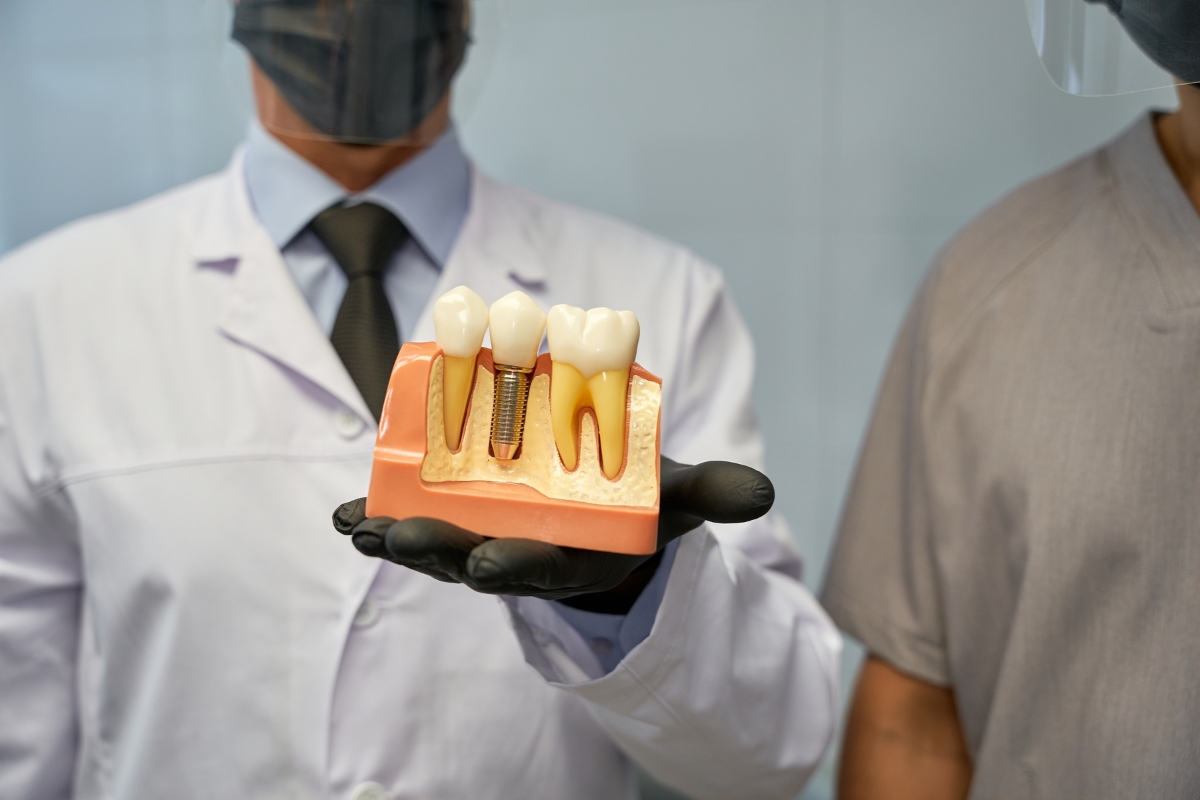
A durable replacement involves a titanium or ceramic post that sits beneath the gumline. This post acts as a synthetic root, integrating with your bone over time. For patients in Colorado Springs and the surrounding mountain communities, single-tooth dental implants at the Center for Advanced Dentistry represent the gold standard for this type of care. Choosing single-tooth dental implants allows us to restore your smile without grinding down healthy neighboring teeth, as is often required with traditional bridges.
The Aesthetic Advantage of Modern Restorations
One of the primary concerns for our patients is how the final crown will look. Traditional porcelain-fused-to-metal crowns sometimes left a dark line at the gumline, which is a giveaway in the smile zone. Today, the Center for Advanced Dentistry utilizes high-strength, metal-free ceramics that reflect light exactly like natural teeth. We carefully match the color to your existing teeth, considering the variations in hue and saturation that make a smile look authentic.
After the implant post is placed and the area has healed, we attach a custom abutment. This small connector piece is shaped to support the gum tissue, encouraging it to frame the new tooth naturally. This attention to “pink aesthetics” and the health and shape of the gums is what separates an average result from a life-changing one. You deserve a tooth that feels as sturdy as it looks, allowing you to bite into an apple or smile for a family photo without a second thought.
Long-Term Health Benefits and Stability
Choosing a permanent solution for a missing tooth does more than just fill a hole. It preserves your facial structure. When a tooth root is lost, the body begins to resorb the bone in that area. This can lead to a “sunken” appearance over time, making you look older than you are. By placing an implant, we signal to the jawbone that it still has a role to play, thereby maintaining bone density and height.
- Bone Preservation: The implant stimulates the jaw, preventing the bone loss that usually follows tooth extraction.
- Tooth Protection: Unlike a bridge, an implant stands alone. This means your neighboring healthy teeth remain untouched and easier to clean.
- Reliable Function: You can eat, speak, and laugh with the confidence that your tooth is anchored directly into the bone.
- Easy Maintenance: You brush and floss an implant just like a natural tooth, with no special threaders or awkward cleaning routines required.
What to Expect During the Healing Phase
Patience is a key part of the process when working in the smile zone. While it might be tempting to rush the final tooth, the healing period – known as osseointegration is what ensures the implant lasts for decades. During this time, the titanium post fuses with your bone. We typically provide a temporary, aesthetic tooth so that you never have to leave our office with a visible gap. This allows you to lead your daily life with confidence while the foundation strengthens.
Once the integration is complete, the final crown is placed. This tooth is designed to withstand the forces of your specific bite. At the Center for Advanced Dentistry, we see this as a partnership. We provide the technical mastery and high-quality materials, and you provide the daily care that keeps the area healthy. Regular check-ups allow us to monitor the health of the surrounding gums and ensure the restoration remains perfectly aligned.
Schedule a consultation at the Center for Advanced Dentistry today. Our team is here to help you regain your function and aesthetics with personalized, high-quality care.
People also ask
How long does it take to replace a front tooth with an implant?
The entire process usually spans several months. This includes the initial placement, a healing period of three to six months for the bone to fuse, and the final design and placement of your custom ceramic crown.
Does getting a single-tooth dental implant hurt?
Most patients report that the procedure involves less discomfort than a standard tooth extraction. We use local anesthesia to ensure you are comfortable, and any post-operative soreness is typically managed with over-the-counter pain relievers for a few days.
Can smokers get dental implants in the smile zone?
Smoking can slow the healing process and increase the risk of implant failure. While being a smoker doesn’t automatically disqualify you, the Center for Advanced Dentistry team will discuss specific protocols to improve your chances of a successful, long-lasting result.
How do I clean a dental implant once it is finished?
You treat your new tooth exactly like your natural ones. Brush twice daily with a soft-bristled brush and floss daily. Keeping the gum tissue around the implant free of plaque is essential for preventing inflammation and ensuring longevity.
