
Most people who get dentures aren’t thinking about what comes next. Dentures solve an immediate problem: missing teeth, difficulty eating, and a smile that feels incomplete. For a while, they do exactly what they’re supposed to. But for many patients, there comes a point when dentures no longer work the way they once did. And that shift is worth paying attention to.
The signs don’t always announce themselves dramatically. They accumulate quietly: a little more slipping, a food you used to enjoy that you’ve started avoiding, a social situation where you felt less confident than you should have. Taken individually, each one seems manageable. Together, they’re telling you something important.
What Changes When Dentures Stop Working Properly
Since dentures rely on suction or adhesives to stay in place, they may shift while eating or speaking. When your dentures were new, that fit was snug enough to compensate for this limitation. Over time, that’s no longer the case, and here’s the biological reason why.
When a tooth is lost, the jawbone beneath it starts to shrink over time. This loss can make it difficult to place an implant or keep dentures stable. For dentures, bone loss causes the jaw to shrink and change shape over time, leading to poor fit, slipping, and discomfort. It’s a slow process, but it’s continuous. And because your dentures were made to fit a jaw that no longer looks the same, the result is a fit that becomes progressively worse no matter how carefully you maintain them.
For patients in Loveland and the surrounding communities living through this exact experience, All-on-4 dental implants at Center for Advanced Dentistry offer a way forward that addresses the root cause.
Specific Signs It’s Time for a Serious Conversation
Not every denture issue requires an implant solution immediately, but these signs consistently indicate that the situation has moved beyond what adjustments alone can fix:
- Your dentures slip regularly — not just occasionally, but during normal eating and conversation
- You rely heavily on denture adhesive just to get through the day
- You’ve quietly eliminated foods you used to enjoy — steak, apples, anything crunchy — because chewing has become too unpredictable or uncomfortable
- Your face shape is visibly changing — a sunken look around the mouth and chin is a direct result of ongoing bone loss beneath the denture
- You’ve needed multiple relines or replacements in the past few years as the bone continues to shrink
- Your confidence in social situations has changed — avoiding speaking up, laughing freely, or eating in public
Any two or three of these together are a strong signal that conventional dentures have reached their clinical ceiling for you.
Why the Jawbone Issue Is the Key Problem
The reason dentures keep requiring adjustment and eventually stop being adjustable isn’t just wear and tear on the appliance itself. It’s what’s happening underneath. Your jawbone naturally shrinks when teeth are missing because it no longer receives stimulation from tooth roots. This process happens gradually but continuously with traditional dentures. Loose dentures can cause sore spots on your gums and make eating difficult. You’ll likely need frequent adjustments or new dentures as your bone continues to change shape.
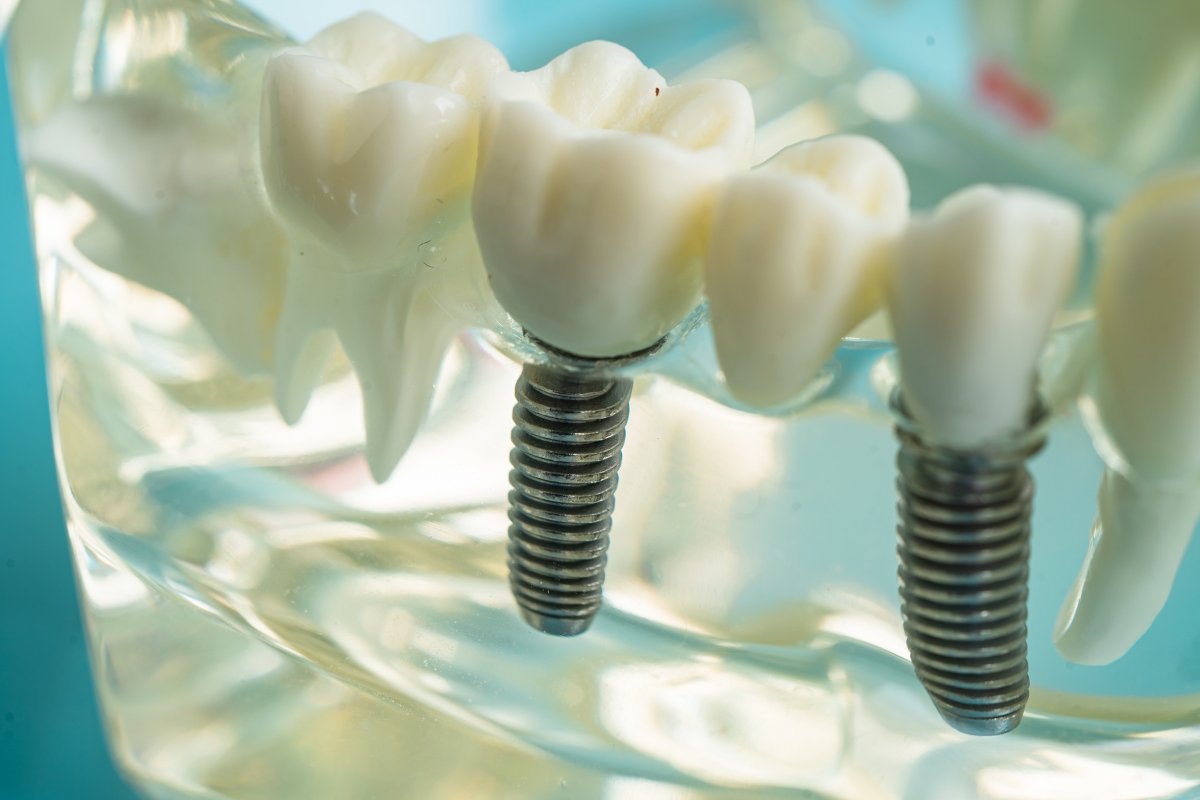
Dental implants interrupt this cycle because they function like tooth roots. They transmit chewing force to the jawbone, signaling the bone to maintain its density. Denture implants help prevent this problem by acting like natural tooth roots. The titanium posts fuse with your jawbone and provide the stimulation needed to maintain bone density and facial structure.
That’s not a cosmetic benefit — it’s a structural one that affects how your face looks, how you eat, and how your remaining bone holds up over the next decade.
What All-on-4 Actually Involves
The All-on-4 system uses four strategically placed titanium implants to support a full arch of fixed prosthetic teeth. Only four implants are used per jaw, placed at an angle — those four posts support a full set of upper or lower prosthetic teeth, and the entire procedure can be done in a single day.
The angled placement is clinically significant. It allows the implants to engage a greater surface area of available bone, which means that even people with extreme bone loss can benefit from this system. Patients who were previously told they weren’t implant candidates due to bone loss are often surprised to find they qualify for All-on-4 after a proper evaluation.
With diligent care, All-on-4 Dental Implants can serve you for a lifetime — a meaningful contrast with conventional dentures, which typically need replacement every five to eight years as the jaw continues changing beneath them.
The Difference in Daily Life
This is where patients notice the change most clearly. The teeth don’t come out at night. There’s no adhesive. Food choices are no longer dictated by what dentures can handle. Fixed implant bridges offer better chewing efficiency and biting force because they are securely anchored and distribute pressures more evenly across the implants.
Speaking in meetings, eating out with family, laughing without hesitation – these are the kinds of things patients describe noticing after making the switch. Not because they expected dramatic changes, but because those small daily limitations had become so normalized that they no longer registered as a problem.
At Center for Advanced Dentistry in Loveland, computer-guided implant placement and 3D imaging are used to plan every procedure with precision before a single incision is made. For patients throughout Oakland County, that level of planning translates directly into better outcomes and a more predictable recovery.
If your dentures are no longer giving you the life you want, it’s worth finding out whether All-on-4 is an option. Contact Center for Advanced Dentistry in Loveland to schedule a consultation and get a clear, personalized picture of what your treatment would look like.
People Also Ask
How long does the All-on-4 procedure take from start to finish?
The surgical phase is typically completed in a single day, with temporary teeth placed immediately. The final prosthetic is usually delivered after a healing period of several months, once the implants have fully integrated with the jawbone.
What if I’ve had dentures for many years – is it too late for implants?
Not necessarily. Even patients with years of bone loss may still qualify for All-on-4 due to the angled implant placement technique, which maximizes contact with available bone. A 3D imaging evaluation will determine what’s possible for your specific case.
Will All-on-4 look natural?
Yes. The prosthetic arch is custom-fabricated to match natural tooth shape, proportion, and shade. Most patients find the result indistinguishable from natural teeth and far more lifelike than conventional dentures.
Can All-on-4 be done on both upper and lower arches?
Yes. The procedure can be performed on one arch or both, depending on where tooth loss has occurred. Your provider will evaluate each arch independently and recommend treatment based on your specific bone structure and restoration needs.
How do I care for All-on-4 implants compared to dentures?
Dental implants, like natural teeth, simply need to be brushed and flossed every day and checked by your dentist after six months, making them easier to manage than dentures, which require nightly removal and separate cleaning routines.
